When Lessons Lead to Personal Musical Journeys
Musical development does not always end with the next piano lesson, vocal exercise or new piece of music.
Sometimes it leads to an original song.
A recording.
A concert.
A music video.
A photo shoot.
A course of study.
A new creative collaboration.
Over many years, students of the BLJ Academy have been accompanied on very different musical and artistic journeys – sometimes over a long period, sometimes at just one decisive moment.
The aim is not to turn everyone into the same kind of musician.
Nor is it to claim credit for developments that take place later.
Rather, the task is to recognise attentively where interest turns into personal initiative, where a talent begins to develop and where an idea might lead to the next step.
Teaching can then become more than working at an instrument.
It can connect people, reveal possibilities and help individuals find their own direction.
For music education should not merely demonstrate how something is played.
It should increasingly empower people to decide for themselves what they want to make of it.
No Predetermined Path
Musical development does not follow a single, standardised plan.
Not every student wants to perform on stage.
Not every student wants to study music.
Not every talent needs to become a profession.
For some, development means finally being able to play a demanding piece as they have long imagined hearing it in their mind.
For others, something new begins: an original song, a recording, a concert, a course of study, a creative project or a professional collaboration.
And sometimes, a major step is simply returning to music after many years.
That is why the BLJ Academy does not follow a fixed ideal of where lessons must lead.
Instead, the essential question is:
What is the next meaningful step for this particular person, right now?
Goals are allowed to change.
Interests are allowed to shift.
Some things become more important, while others lose their significance.
Teaching should accompany this development rather than restrict it.
It can provide orientation, reveal possibilities, build skills and offer support wherever interest develops into personal initiative.
Success therefore takes many forms.
It may mean studying music.
Releasing a recording.
Giving a successful performance.
Making music together for decades.
Or rediscovering something at the age of sixty or seventy that has been dormant for a long time.
It is not the predetermined path that matters.
It is the ability to find one's own.
Journeys That Lead Further
Leon Glauning – From Listening to His Own Artistic Voice
Leon Glauning received piano instruction over an extended period.
From an early age, he demonstrated an exceptionally intuitive relationship with music. As a child, he could play around 70 Beatles songs from memory – relying less on reading sheet music than on listening, remembering and recognising musical patterns.
This ability points to something that plays an important role at the BLJ Academy:
Not merely reading music, but hearing it, recognising it and making it available from within.
Not merely reading music, but hearing it, recognising it and making it available from within.
A particularly humorous example emerged during a Flow Waltz Competitioninitiated by Bastian Lee Jones. Leon performed his contribution while lying on his back at the piano – with his hands crossed.
What initially appears to be a playful idea touches upon a fundamental principle of the Academy:
Once a musical pattern has been sufficiently internalised, it becomes possible to move beyond its familiar form.
To vary.
To vary.
To recombine.
To experiment.
Skill becomes play.
From these years of lessons, Leon later developed his own musical path. He studied jazz, wrote original songs and developed his own artistic work, including music releases.
The connection was not limited to piano lessons. Over time, photographic work was also created for his presentation as an artist.
His journey illustrates what development at the BLJ Academy can mean:
Listening. Understanding. Internalising. Playing. And from there, developing something of one's own.
Sigrun T. – When Music Connects People Across the Years
Sigrun T. has been taking singing lessons at the BLJ Academy for more than ten years. She also plays the guitar, has recently taken up the ukulele, and has had her grandfather's cello restored. She is now learning to play the cello with great enthusiasm. Playing the cello has considerably improved Sigrun's musical ear. For many years, she has also been singing with Die mollys.
The group – Annette, Angela, Peter and Sigrun – meets regularly to make music together, taking turns hosting sessions in their homes. They sing in harmony, arrange songs, experiment and accompany one another – using instruments including guitar, ukulele, flute, harmonica and cello.
Their repertoire includes evergreens as well as Irish folk music.
What has developed through these years cannot meaningfully be measured solely in examinations, qualifications or releases.
Something else has grown:
A musical community.
Singing together has become a regular part of life. People listen to one another, discover their voices within an ensemble, develop arrangements and share music.
This also includes public performances – for example, at the Fête de la Musique in Berlin.
Sigrun's journey therefore reflects an important principle of the BLJ Academy:
Musical development does not necessarily have to lead to a professional career in order to be deeply meaningful.
It may mean keeping music alive in one's own life over decades – together with other people.
Music comes alive wherever people come together and share it.
Naphat N. – Talent, Change and Mutual Inspiration
From the very beginning, Naphat N. brought an extraordinary combination of music, images, stories and memory into her piano lessons.
Her visual and musical powers of perception were remarkable. For example, after just a few weeks, she was able to play much of Debussy's Clair de Lune from memory.
Yet musical development does not always follow a straight line.
Following a significant period in her life, some of the circumstances affecting Naphat's learning also changed. What remained, however, was perhaps something even more fundamental:
Her love of music, creativity and discovery.
This reflects an important principle of the BLJ Academy:
Naphat's interests had always extended far beyond the piano. Natural sciences, film, anime, stories and creative hands-on projects were all part of her world. She later successfully studied chemistry and biology with the aim of becoming a teacher at Freie Universität Berlin.
The world of Studio Ghibli , with its distinctive combination of music, imagery, imagination, emotion and storytelling, played a particularly important role for her.
Another important musical influence was the pianist and YouTuber Animenz, whose virtuosic piano arrangements of anime music have reached a large international audience.
This shared interest eventually led to a special encounter: Bastian Lee Jones conducted an interview with Animenz, and Naphat was able to contribute questions to her musical role model indirectly.
But inspiration did not flow in only one direction.
Through Naphat's enthusiasm, Bastian Lee Jones also developed a deeper appreciation of the music of Studio Ghibli films.
Something a student brought into the lesson thus became an inspiration for the teacher's own artistic work. Later, this led to original studio recordings featuring music from the world of Studio Ghibli.
This is Docendo discimus – we learn by teaching in its most immediate form.
Teachers bring knowledge, experience and opportunities.
Students bring different experiences, interests, questions and worlds.
When these perspectives meet, something can emerge that neither person had originally planned.
Teaching is not a one-way street.
Sometimes a new artistic journey begins with a very simple question:
“Do you know this, by any chance?”
Listen to the Studio Ghibli Recordings →
Bo and Henry R. – Mother and Son, Two Musical Journeys
Bo and Henry R. – Mother and Son, Two Musical Journeys
The connection with Bo R. began in 2014 – the very first email from that time still exists in Bastian Lee Jones's personal archive.
Their first meeting already had a character of its own.
When Bastian noticed furniture from Bali – the place where he himself was born – Bo immediately asked him:
“Bastian, are you a hippie?”
His answer:
“No, more of a luxury punk.”
That broke the ice.
From this charming first encounter grew a musical relationship lasting many years – initially with Bo and later with her son Henry.
Bo worked on classical repertoire, including Beethoven's Moonlight Sonata.
Henry, however, made it clear early on that he wanted to follow his own path.
Reading sheet music held little interest for him. A systematic programme of scales, technical exercises and prescribed repertoire would probably have diminished his enjoyment of the instrument rather than encouraged it.
So a different kind of teaching developed.
Playing.
Listening.
Experimenting.
Singing.
Discovering songs.
And above all: being allowed to decide for himself where his musical attention should turn.
Songs such as David Bowie's Space Oddity and Billy Joel's Piano Man became starting points for exploring voice, piano and musical expression.
Looking back, Henry expressed a thought that is fundamental to the BLJ Academy, roughly in these words:
“I didn't really want to play the piano at all. But you always let me do things my own way and never dictated what I had to do. And somehow, I stayed with it all those years.”
He later expressly thanked Bastian for this.
That gratitude is perhaps one of the strongest indications that educational success cannot always be measured by how thoroughly a prescribed curriculum has been completed.
Sometimes success means that someone has been able to maintain their relationship with music.
Accepting people as they are , however, does not mean overlooking the consequences of different learning paths.
Henry's piano technique developed in a distinctly individual way. A traditional piano teacher would probably have approached certain aspects differently.
But teaching must always ask another question:
What happens to this person if I now force them to learn in my way?
In Henry's case, a compulsory programme of rigorous technical exercises might have been counterproductive from an educational perspective.
So he was allowed to develop his own way of playing.
Bo later observed, quite aptly, that Henry had almost developed a style of his own. entwickelt.
This is not a rejection of technique.
It is a question of priorities:
Technique should open up possibilities for a person – not become the reason they give up music.
A small episode illustrates Henry's unusual journey particularly well.
Although he had little interest in conventional music reading, Bastian Lee Jones once asked him to write out Erik Satie's Gnossienne No. 1 aufzuschreiben.
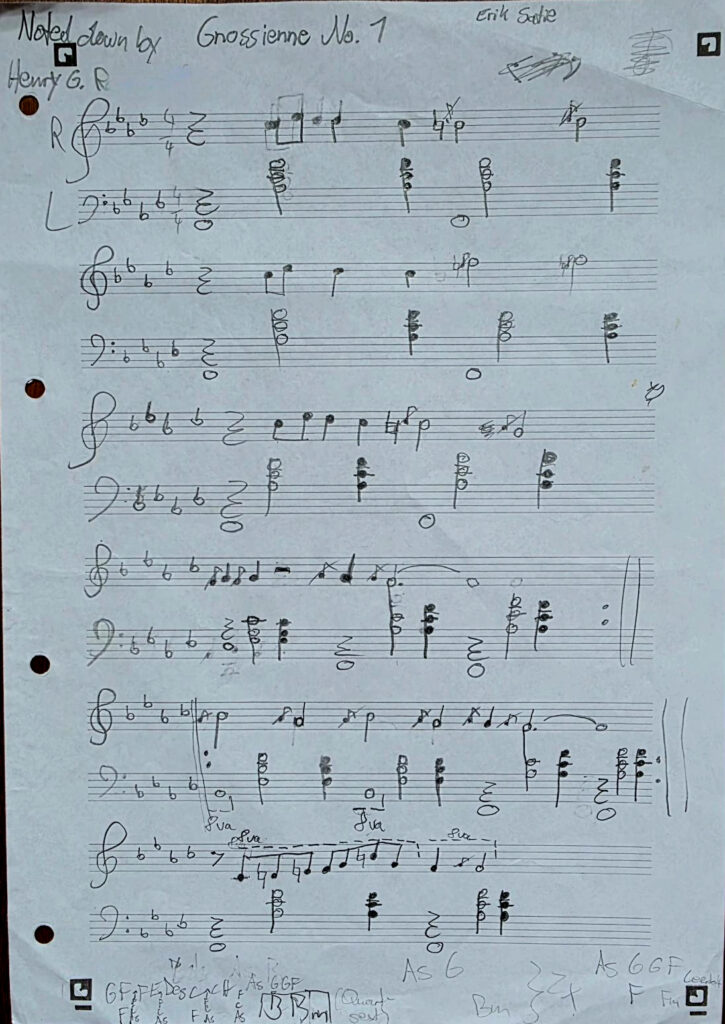
Henry did so – and afterwards gave Bastian the handwritten sheet music as a gift.
It still exists today.
Later, before spending time in Rome, Henry prepared musically so that he would be able to play and sing songs there. According to his recollection, he also met a saxophonist during his stay. His subsequent education left little time to develop this into a larger musical project.
But the music had travelled with him.
When Lessons Create Connections
Henry also provided the connection to Remo.
Henry and Remo were close friends and frequently spent time together. Eventually, Remo also began taking piano lessons.
Sometimes Henry and Remo were taught together – occasionally at Remo's home in Tiergarten.
Something developed that remains characteristic of the BLJ Academy to this day:
Teaching does not take place exclusively within an isolated teacher-student relationship.
People bring their families, friendships, interests, humour, experiences and new connections with them.
One encounter leads to another.
And sometimes a small creative network develops that nobody had planned in advance.
Bo, Henry and Remo therefore represent more than different musical journeys.
They also illustrate a fundamental educational conviction:
A person should not have to be made to fit a method.
The method must be flexible enough to meet the person where they are.
Remo R. - Discipline, body awareness and his own path.
Remo R. came to lessons through Henry R.
Both attended the same school and were close friends for a time. Yet it quickly became apparent during lessons that Remo had his own distinctive approach to music and to life.
Remo was another student for whom reading sheet music was not central.
Unlike some others, however, he was happy to take up musical suggestions – provided they suited him.
Pieces such as the theme from Mission: Impossible immediately captured his enthusiasm.
And shortly before his Abitur, he set himself a clear goal: he wanted to play Beethovens „Für Elise“ vollständig – not just the famous opening, but the complete work.
This is more demanding than it often appears.
And it revealed something characteristic of Remo:
When he decided to do something, he wanted to do it properly. machen.
This attitude shaped not only his approach to music, but also the way he worked on himself.
Remo had a strong interest in sport, body awareness and physical training..
He pursued intensive strength training, worked with considerable discipline on his physical development and developed an early ambition to work in the fields of sport, training and coaching. zu arbeiten.
What stood out was not only his determination, but also his independence.
He designed his own high-protein nutritional programme, reflected on physical optimisation and even developed ideas for personal care products – all with the intention of proceeding as consciously, thoughtfully and scientifically as possible.
Something became visible during lessons that extended far beyond music:
Learning is not only about expression.
Learning is also about consciously shaping oneself.
Remo therefore brought a different kind of energy to lessons from many other students.
His approach was neither bohemian nor particularly dreamy. It was closer to questions such as:
How can I make the most of my abilities?
How can I shape myself?
How can I improve?
This attitude was also apparent in language and creativity.
During lessons, Remo wrote his own song lyrics, including a rap whose clarity, individuality and expressive character stood out.
This revealed another important aspect of his personality:
Even someone who thinks strongly in terms of the body, discipline and performance often possesses an equally rich creative inner life.
It is precisely this connection between body and mind, between training and expression, between discipline and creativity , that makes his journey so interesting.
Another facet was his enjoyment of intellectual challenges.
Remo repeatedly wanted to play chess with Bastian Lee Jones – another field involving strategy, concentration and mental alertness.
His journey illustrates how music education does not always work through the same educational approach.
Some people find their way into music through emotion.
Others through play.
Still others through structure, determination and self-discipline.
Remo was one of those students who made something particularly clear:
Awareness is also a form of musicality.
His example demonstrates that musical development need not be understood separately from the rest of life.
Someone who learns to work on themselves, develop their physical abilities, establish habits, maintain concentration and take their own goals seriously often brings qualities that are equally valuable in music:
Perseverance.
Presence.
Rhythm.
Concentration.
Discipline.
In his own way, Remo R. therefore represents an important principle of the BLJ Academy:
Artistic development can take many different forms.
But it gains depth whenever a person begins to shape their own development consciously.
Dieter Starke – Chanson, Character and Stage Presence
Dieter Starke came to lessons with a clear enthusiasm for singing, chanson and cabaret.
He repeatedly looked for opportunities to perform with a pianist and bring his repertoire to the stage. His performances took him to venues including boutiques and the former fire station in Friedrichshain.
Over time, something more than a song recital began to emerge.
Dieter developed characters and small theatrical worlds.
As the “Night Ghost” , for example, he appeared in a nightshirt and sleeping cap – a deliberately staged character full of humour, atmosphere and theatrical presence.
His interpretation of the "Clown" had a different quality: quieter, more melancholic and reflective.
His repertoire was correspondingly broad.
Dieter continually brought his own suggestions to lessons – from chansons and folk songs to arias.
This openness turned teaching into a shared process of exploration:
Which song suits the voice?
Which story should be told?
What kind of character emerges from it?
And how can that character become convincing on stage?
Record, Watch and Improve
Parts of the programme and individual performance sequences were repeatedly recorded on audio and video..
The recordings became a mirror.
How does a movement come across?
Are the words understandable?
Does a musical phrase carry?
Is a character convincing when viewed from the outside?
Where does a performance lose momentum – and where does something special suddenly emerge?
Recording was therefore not simply the final product, but already part of the learning process..
Dieter had originally hoped that Bastian Lee Jones would accompany him directly on the piano during his performances.
However, a solution was needed that would give him greater independence.
Together, they therefore worked with prepared accompaniments and eventually made extensive use of backing tracks with reduced lead vocals. gearbeitet.
Dieter was convinced by the solution – and, above all:
It worked on stage.
He was increasingly able to perform his programmes independently, without having to organise a pianist for every appearance.
This, too, reflects a fundamental principle of the BLJ Academy:
A musical solution must not only be theoretically correct. It must work for the individual and the situation in which it is needed.
And wherever possible, it should help that person become more independent.
Voice, Image and Personal Presentation
The collaboration therefore extended beyond vocal training alone.
Together, they developed a photo shoot, a distinctive visual identity and flyers for his performances..
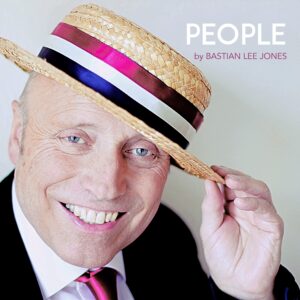
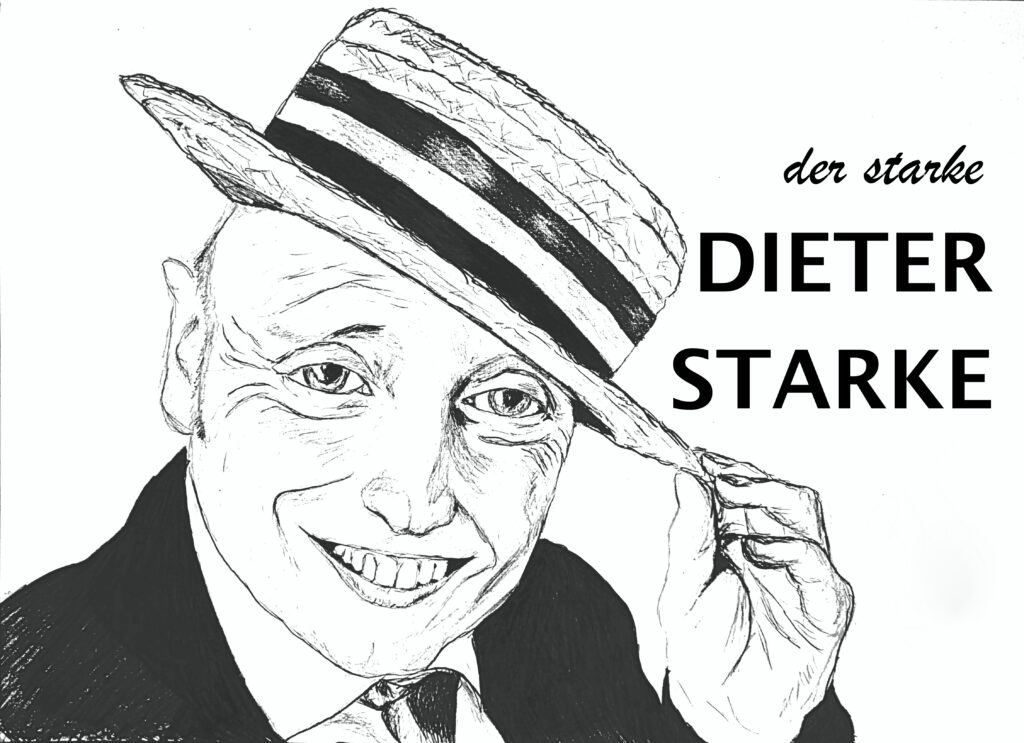
At Bastian Lee Jones's suggestion, Dieter also set up his own YouTube channel, enabling him to present his work publicly.
Singing, concert preparation, recording, stage performance, photography and personal presentation thus came together as part of a larger whole.
Dieter's journey illustrates a fundamental point:
Artistic expression does not arise from the voice alone.
Artistic expression does not arise from the voice alone.
And sometimes artistic development also means finding a practical form that allows a personal idea to be brought to the stage.
Watch The Night Ghost – Live Performance →
Watch The Clown – Live Performance →
Georgette Tripes – Voice, Independence and Finding Her Own Direction
The connection with Georgette Tripes began through her mother, Ange, who had previously taken singing lessons herself and later recommended Bastian Lee Jones to her daughter.
From the beginning, Georgette stood out for her powerful, soulful and expressive voice. auf.
Lessons focused intensively on vocal technique, control, expression and stylistic flexibility. Her repertoire ranged from Rihanna and Mariah Carey to Etta James, the Fugees and Sarah Vaughan..
Pop, Soul, Jazz und unterschiedliche Formen vokaler Interpretation trafen dabei aufeinander.
But at some point, another question increasingly moved to the centre:
What does Georgette herself want to say?
Songwriting became an increasingly important part of their work together.
Georgette writes in English and French , among other languages, and moves naturally between different linguistic and cultural worlds. This gives rise to an individual perspective that cannot easily be confined to a single musical category.
This became particularly important when she began working with producers from the hip-hop scene.
Not every direction suggested to her matched what she herself wanted artistically.
And that, too, is part of creative development:
Collaboration does not mean giving up your own direction.
You have to learn to listen, take opportunities seriously – and still be able to distinguish:
What suits me?
What will help me develop further?
And what would take me away from who I really am?
Creativity Does Not End at the Studio Door
Georgette's journey increasingly connected music with other creative fields.
Alongside singing and songwriting, she also worked as a model and in front of the camera.
Bastian Lee Jones supported her not only musically, but also helped establish contact with professional model management and accompanied her to a meeting.
Such experiences demonstrate that a creative career requires more than talent.
You need to be able to talk about your own work.
Know your own goals.
Interact with other people.
Ask questions.
Make decisions.
And sometimes discover what you actually want only through conversation.
Music Business Is People's Business.
This experience is therefore just as much a part of artistic development as vocal technique or songwriting.
When Georgette is in Berlin, her journey still brings her back to working together from time to time.
Not because her development is complete.
But precisely because it continues.
Her story therefore reflects a central idea of the BLJ Academy:
Having a strong voice is a beginning.
Finding your own voice is the real journey.
Watch Georgette in an Interview →
Tom Stark – Curiosity, Perseverance and the Freedom to Make Mistakes
Tom Stark came to lessons through the piano.
His mother Patricia and his sister Greta also received lessons from Bastian Lee Jones for a time – music thus became a shared point of connection across several members of the family.
One quality stood out in Tom from an early age:
He was curious – and remarkably unafraid of making mistakes.
Sometimes he would play a passage what felt like twenty times, making the same mistake again and again.
But instead of becoming discouraged, he kept experimenting.
A different movement.
Different fingering.
A different tempo.
One more attempt.
Bastian once expressed a thought to him along these lines:
“At some point, a professional has made almost every mistake it is possible to make.”
Mistakes are not simply things to be avoided.
They reveal possibilities, limitations and approaches that do not work – and often indicate where a better solution might be found. For Tom, this became a particular strength:
He did not turn a mistake into a personal drama.
He stayed focused on the task.
And through this combination of patience, curiosity and perseverance, he very often reached his goal.
Bastian once described this to him as a genuine winning quality..
Not because Tom could always do something straight away.
But because temporarily not being able to do something was rarely a reason for him to stop.
Learning Across Different Worlds
For Tom, music became connected with other interests from an early age.
Technology, programming and later engineering studies were as much a part of his world as music, travelling and visual design.
During piano lessons, he developed an interpretation of Brian Crain's “Rain”, among other pieces. This grew into a collaborative music video, conceived and produced together with Bastian Lee Jones.
Lessons became documentation.
A piece of music became a small creative project of its own.
The visual dimension also played a role.
Bastian encouraged Tom to explore his potential in modelling. They arranged a photo shoot to create suitable photographic material, and Tom was later listed with a modelling agency.
This was not about suddenly turning music lessons into modelling coaching.
Rather, it once again reflected a fundamental principle of the BLJ Academy:
People bring more with them than the particular skill that happens to be the focus of a lesson.
Sometimes it is worth recognising these other qualities and giving them room to develop.
Trust That Lasts
Although Tom was no longer able to attend regular lessons for extended periods because of his studies, travels and other aspects of life, their connection remained.
Even today, messages, questions, music and short videos regularly arrive from his travels – sometimes accompanied by songs by Bastian Lee Jones that continue to travel with him.
And these exchanges are by no means always about music.
Tom also asks for perspectives on countries, attitudes, encounters with people, languages, travel routes and practical experiences – for example, in connection with Indonesia.
The fact that such questions are still being asked years after the actual lessons reveals another dimension of educational work:
Trust can last longer than the lessons themselves.
Not because a teacher has all the answers.
Inzwischen taucht eine neue musikalische Idee auf:
But because, through years of shared experience, a feeling can develop:
“I can ask this person. I value his perspective.”
This also changes the relationship.
A former teacher can become someone to talk to about particular questions in life – without creating dependency.
Quite the opposite:
Advice can provide orientation.
The decision remains with the individual.
This, too, represents a form of independence that matters to the BLJ Academy.
And Music Can Return
A new musical idea has now emerged for Tom:
Er möchte sing and accompany himself on the guitar – reconnecting with their work together after several years.
His journey therefore illustrates several principles of the BLJ Academy:
Mistakes do not have to prevent someone from reaching their goal. Sometimes it is precisely repeated experimentation that leads them there.
An educational relationship can continue to have an influence long after regular lessons have ended.
And:
Sometimes someone first follows their own path – and returns later with different experiences, different questions and a new goal.
Brian Crain – “Rain”, performed by Tom Stark →
Felipe – Voice, Language and Turning Enthusiasm into Something of His Own
Felipe attends singing lessons at the BLJ Academy.
His musical development is increasingly connected with language, piano, stories and digital media.
Felipe has Brazilian roots and moves naturally between several languages. He sings songs in German, English and Brazilian Portuguese , listening particularly closely to how different voices, translations and dubbed versions affect the listener.
For him, the voice has long since become more than a means of singing.
It is also language, character and expression..
First His Own Songs – Then New Doors Open
Felipe has quite a clear idea of what he wants to hear and sing.
For a long time, song suggestions therefore came almost exclusively from him.
This was respected.
With growing trust, however, something new developed: Felipe now also accepts suggestions from Bastian Lee Jones – particularly when a piece can help resolve a specific vocal technique issue.
After all, favourite songs do not automatically provide the best conditions for learning.
After all, favourite songs do not automatically provide the best conditions for learning.
Rather than forbidding him from singing his favourite music, they listened more closely together:
What is part of the original artist's style?
Which aspects are beneficial for my own voice?
And what am I merely copying because I have heard it so often?
For a time, Felipe was particularly enthusiastic about the YouTuber Hao FX and repeatedly sang his songs.
But as his own experience grew, his musical taste also began to change.
Musical structures that had once fascinated him eventually became predictable. This opened up space for more complex songs and other artists – including Elton John, David Bowie and Queen..
That, too, is development:
His earlier interests were not wrong.
His own ear has continued to develop.
Musical education also means being allowed to develop one's taste.
Not because somebody dictates what constitutes “good music”.
But because one learns to listen more closely – and eventually discovers independently that one is looking for something different.
Bringing Singing and Piano Together
Felipe also takes piano lessons with another teacher. At the same time, it is becoming increasingly important to him to be able to accompany himself on the piano while singing.
This is where different learning paths meet
His father Eudinho, himself a musician, supports him by preparing lead sheets or transposing songs into suitable keys.
During lessons at the BLJ Academy, singing and piano are then brought together:
How much piano accompaniment does a singer really need?
Where does an accompaniment need to be rhythmically secure?
Where can it be simplified?
How can enough attention remain available for breathing, lyrics and expression?
In this way, the piano does not become another end in itself, but a tool for greater musical independence.
From an Improvisation Battle to His Own Rhyme Practice
A particular exercise initially emerged quite spontaneously.
Bastian and Felipe engaged in a small musical battle::
Given a word or a spontaneously suggested phrase, each had to invent and sing a melody immediately – first Bastian, then Felipe.
It was not about right or wrong.
t was about reaction, language, melody and spontaneity.
At first, Felipe was not satisfied with his own verbal flexibility and spontaneous responses.
And that led to something important:
He decided for himself to work on it.
Since then, on his way to singing lessons, Felipe has regularly made up a six-line rhyme. aus.
At the beginning of the lesson, he recites it from memory.
Along the way, he is training:
Rhythm.
Language.
Memory.
Word formation.
Articulation.
Timing.
Spontaneity.
Presence.
After the lesson, he sends Bastian the rhyme in writing – often together with a photograph of the three Ninjago figures he has brought along.
A spontaneous situation during a lesson thus developed into a regular exercise of his own choosing.
And this reflects an essential educational principle:
Sometimes the strongest impulse to learn emerges at the very moment someone realises for themselves: This is exactly what I want to become better at.
Three Ninjago Figures
Felipe almost always brings three figures from his extensive Ninjago collection to his lessons..
This has developed into a little guessing game of its own.
Felipe brings three figures and asks questions:
What are their names?
Which season do they appear in?
How much screen time do they have?
Which of them is particularly rare?
Bastian tries to answer – occasionally with help from Niels, a student of roughly the same age who has a lesson before Felipe and knows considerably more about the Ninjago universe.
After their guessing game, Felipe photographs his three figures.
He later sends Bastian the picture together with his rhyme.
But his enthusiasm for Ninjago eventually led to another question:
Why only learn about existing stories?
Why not invent the perfect season of his own?
Felipe began to develop the Ninjago universe further in his imagination.
And from there, the next step follows:
Changing characters.
Changing names.
Developing original characters.
Writing original stories.
Enthusiasm becomes pattern recognition.
Pattern recognition becomes recombination.
Recombination becomes invention.
A fan can become an author.
This reflects an important principle of the BLJ Academy:
Creativity does not have to begin with something created entirely from nothing.
It can begin with something one loves – and gradually grow into something original.
From Dubbing Voices to Audio Drama
Because Felipe loves series and films, he is interested in more than their songs.
He also listens very carefully to voice actors and different ways of speaking..
How does a voice change a character?
Why does the same scene feel different in another language?
Which voice sounds convincing, funny, threatening or vulnerable?
This interest eventually led him towards audio drama.
Felipe was given a role – and his enthusiasm for voices became practical experience in front of a microphone.
Performing, Recording and Editing His Own Work
Felipe is also gaining experience on stage and receiving considerable positive encouragement.
He has performed in family settings in Brazil as well as at a school event in Germany.
He is currently putting together a video of his own: performance footage from Brazil, a school performance and a recording of himself accompanying his singing on the piano with "Burn" selbst am Klavier begleitet.
He is editing the video himself using Capcut.
Digital tools are therefore a natural part of their work together.
YouTube, smartphone recordings, CapCut and music or media platforms can help with researching material, documenting progress, making comparisons and creating original content.
Technology does not replace learning.
It expands the possibilities for creating something of one's own with what has been learned.
Felipe's journey therefore illustrates particularly clearly what individualised teaching can mean:
Not pushing interests aside so that the “real lessons” can finally begin.
Instead, looking closely:
What already inspires this person – and how can that become the starting point for their next step in development?
Six lines.
Three figures.
One song.
One voice.
One piano.
And from these, again and again:
Another attempt to create something of his own.
Ella W. – When Music Becomes a Space for Personal Expression
Ella W. began with piano lessons.
Two particular strengths became apparent early on:
An exceptionally good musical ear and a remarkable memory.
Ella can absorb musical material quickly, remember it and recall it when needed.
At the same time, she has a great deal of energy – and the ability to immerse herself in music with remarkable intensity for extended periods.
A whirlwind who can suddenly become completely absorbed in one thing when sitting at the piano.
At first, reading sheet music was not among her favourite activities. Having previously taken violin lessons, her approach to the piano was shaped more strongly by sound, movement, listening and memory. geprägt.
Yet when she really wanted to play a piece, she could become remarkably determined.
Her repertoire includes Handel's Passacaglia, Yann Tiersen's music from Amélie, Beethoven's complete Für Elise Gibran Alcocer's Idea 10 and Yiruma's River Flows in You.
She returns to some of these pieces again and again – sometimes over long periods.
For Ella, however, the piano also serves another purpose:
It becomes a place where feelings can take shape.
Joy.
Anger.
Sadness.
Being in love.
Restlessness.
Sometimes what is difficult to put into words can be expressed through playing.
Her family therefore experiences the piano not merely as an instrument, but as an important space for personal expression.
More Than Simply Reproducing Music
Ella does not always settle for the original version.
She changes phrasing, experiments with variations and develops musical solutions of her own.
With Idea 10 , for example, she created a personal version in which individual passages differed considerably from the original and developed their own musical logic.
This marks an important step:
A piece is no longer merely reproduced. It becomes one's own.
When writing her own lyrics and inventing melodies, Ella also frequently works with material she knows from other music.
Musical ideas are absorbed, remembered, transformed and recombined.
Patterns are recognised.
Then recombined.
And gradually, something original emerges.
From Piano to Voice
One day, Ella asked a simple question:
“Can I actually have singing lessons with you as well?”
This opened up a new area of exploration.
Piano and voice became increasingly interconnected.
Among other pieces, she worked on Vanessa Carlton's A Thousand Miles, accompanied herself on the piano and eventually performed the song at a music evening at her school.
Music was no longer something that took place only during lessons or at home.
It became performance.
A Weekend for a Recording
A performance later led to an unexpected opportunity.
A musical recording was needed at short notice for a charity film project: an English-language bossa nova version of a well-known children protection song..
Over the course of a single weekend, Ella worked intensively on the recording with Bastian Lee Jones.
In approximately six to eight hours, several elements had to come together:
Piano.
Singing.
Interpretation.
Timing.
Recording.
This was where her musical memory and her ear became particularly apparent.
In a very short time, Ella absorbed new material, combined piano playing with singing and worked with concentration towards a complete interpretation.
The recording was completed – and the feedback from the production was extremely positive.
This project demonstrated particularly clearly what can happen when musical hearing, memory, concentration, motivation and a specific task suddenly come together..
Sometimes a person develops over months.
And sometimes, in a single weekend, it becomes apparent how much preparation has already taken place.
Learning Also Means Persevering
Although reading sheet music is still not Ella's favourite part of making music, it is not simply left aside.
Carl Philipp Emanuel Bach's Solfeggio , for example, is used to work on this skill in a focused way.
And here, too, her particular strength becomes apparent:
Once she decides to take on a task, she can quickly reconnect with material she has already learned.
The aim is not to replace her intuitive and auditory strengths with an academic system.
It is to give her more possibilities zu geben.
Listening and reading.
Remembering and understanding.
Improvising and refining.
The more of these abilities become available to her, the more freely she will eventually be able to choose which ones she needs.
Creativity in Many Forms
Ella's creativity does not end at the piano.
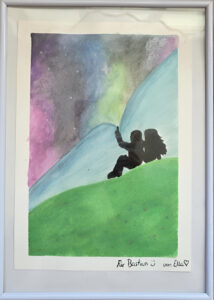
She writes lyrics, develops melodies, enjoys painting and works just as naturally with her body – including through sport and aerial silks.
A sense of responsibility is also part of her story.
When help was needed to care for the cats during an extended absence, Ella took on this task reliably and with a strong sense of responsibility.
At first glance, such things have little to do with piano technique.
And yet they reveal something about personal development:
Trust grows not only through ability.
It also grows through reliability.
Over the years, lessons have therefore also developed into a relationship of trust in which questions extending far beyond individual pieces of music can find their place.
The decision, however, always remains Ella's own.
Teaching offers guidance, possibilities and a safe space in which to experiment.
Nothing more – but nothing less, either.
Ella's journey beautifully illustrates what can emerge when a person does not constantly have to control their energy, but learns to give it shape.
Sometimes music is not the opposite of a whirlwind.
It is the form that whirlwind can take.
Traces That Remain
What remains is not only the pieces of music, performances or recordings.
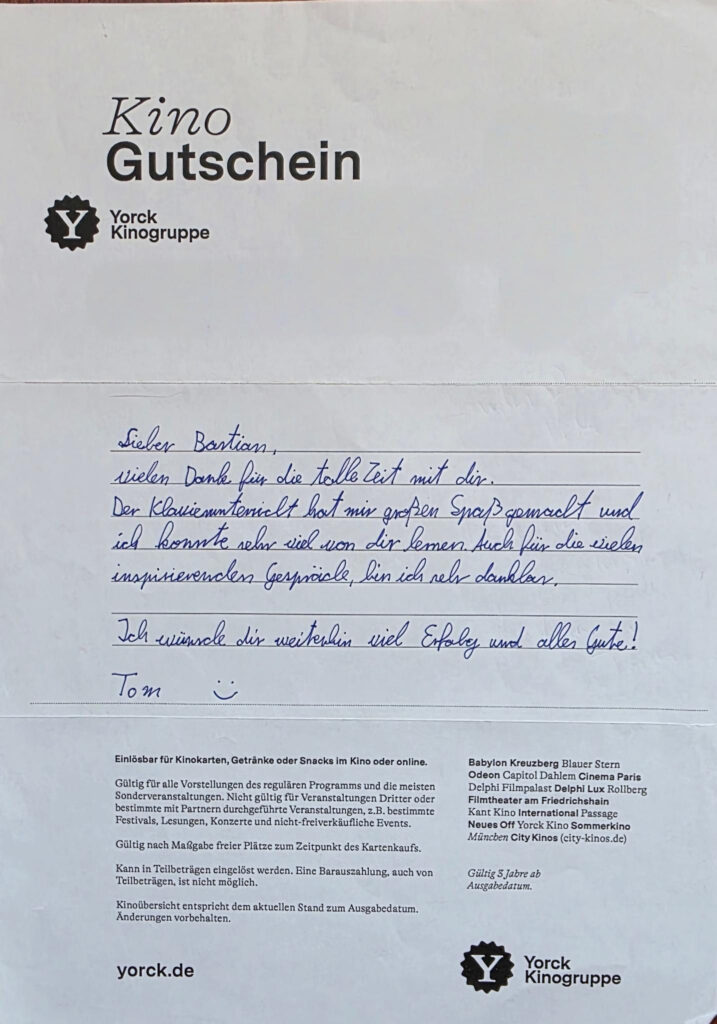
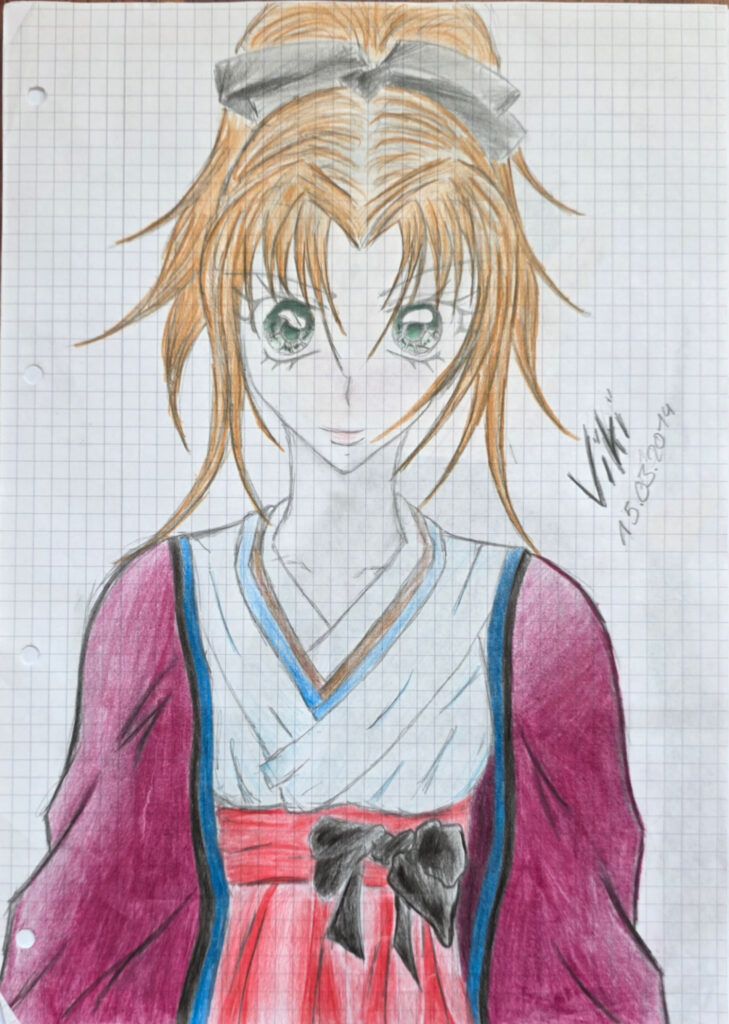
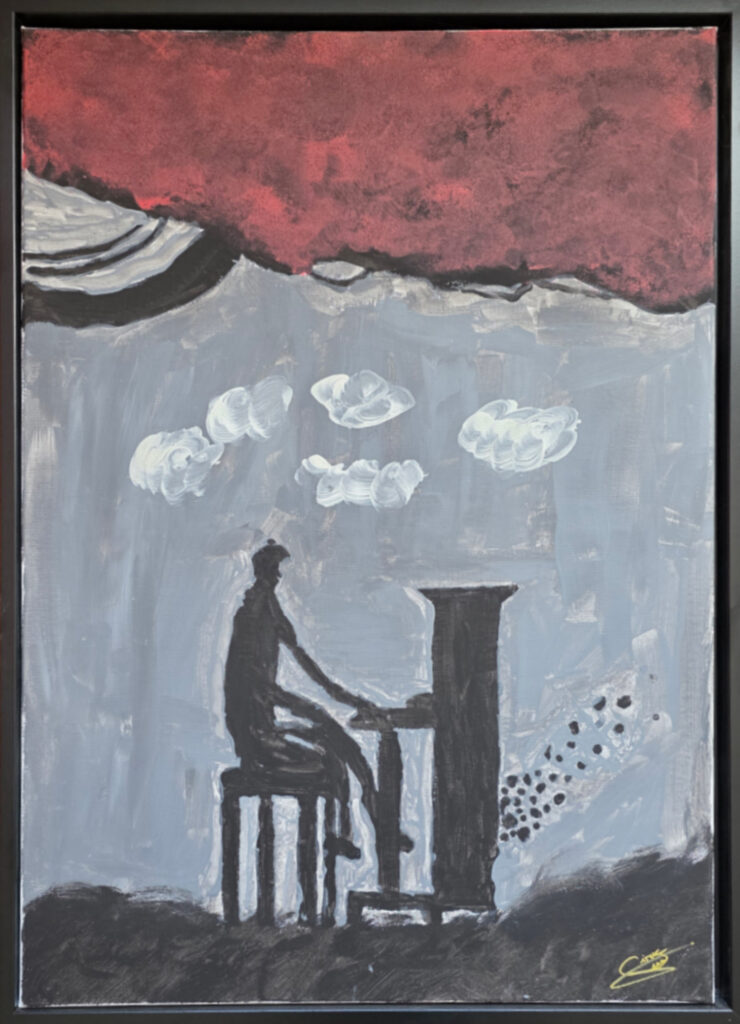
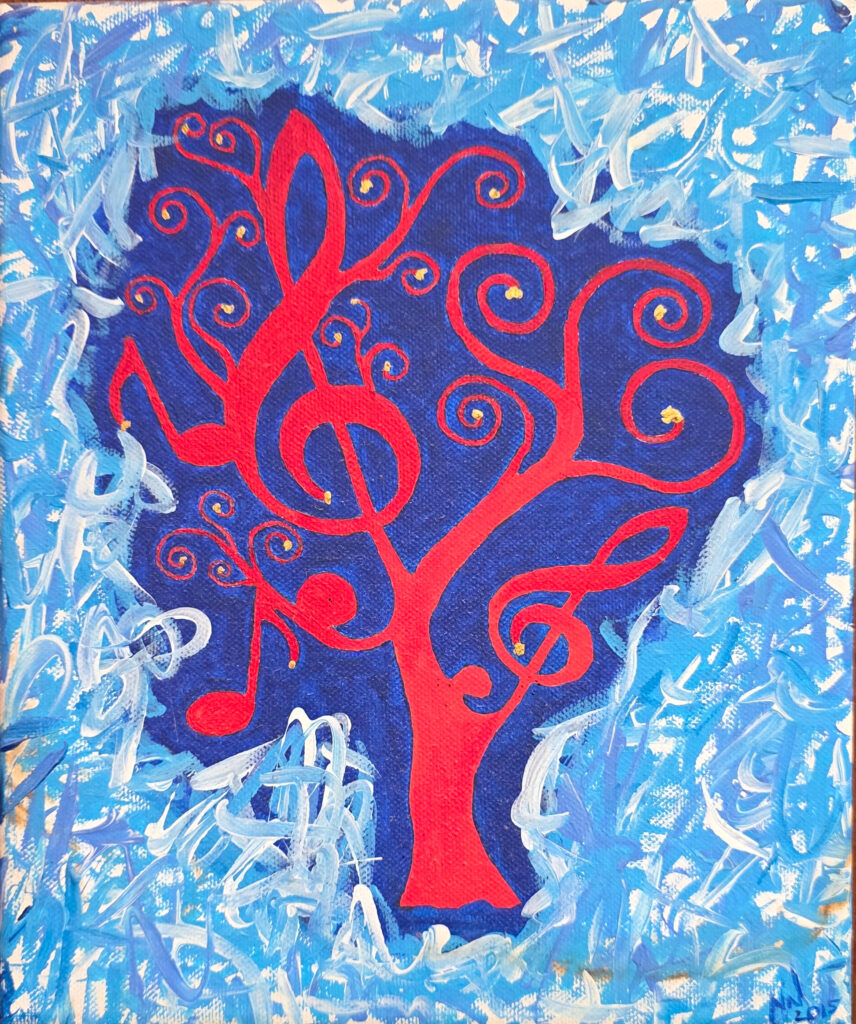
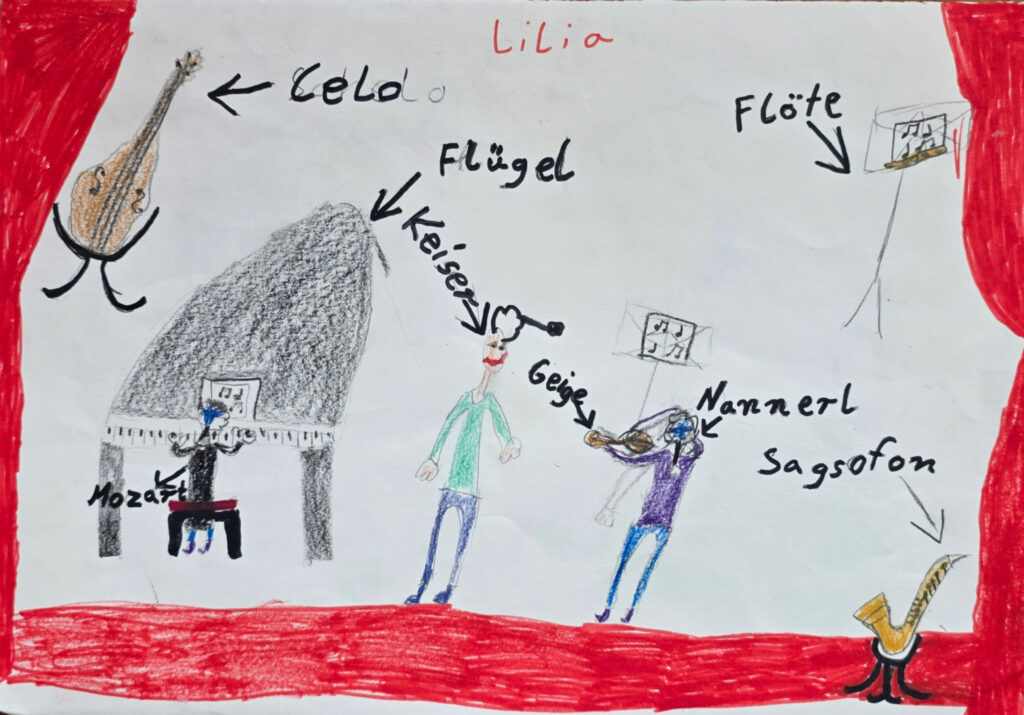
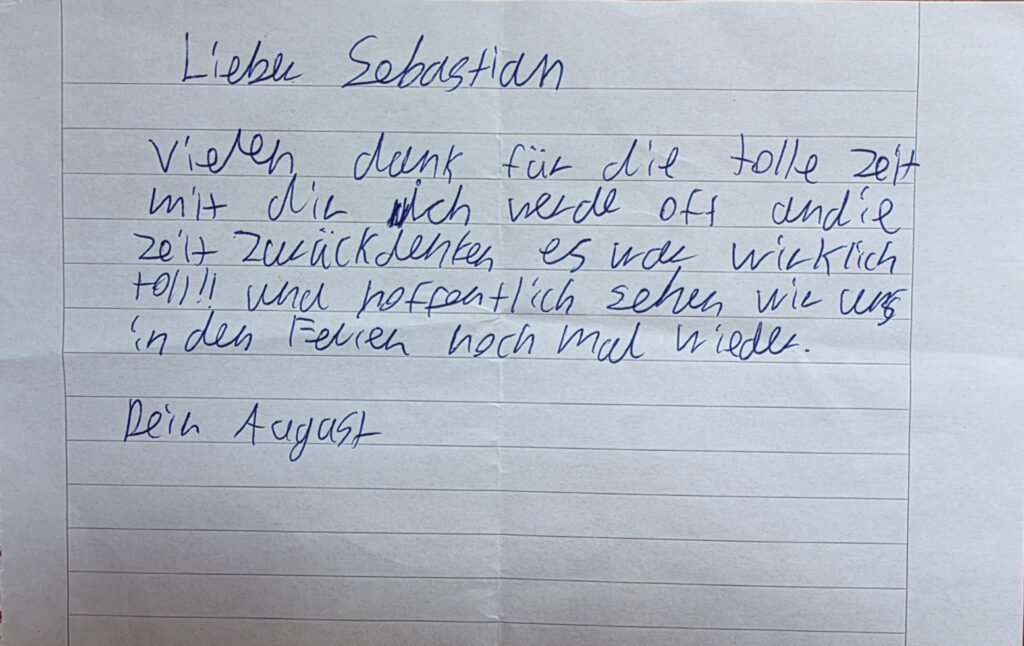
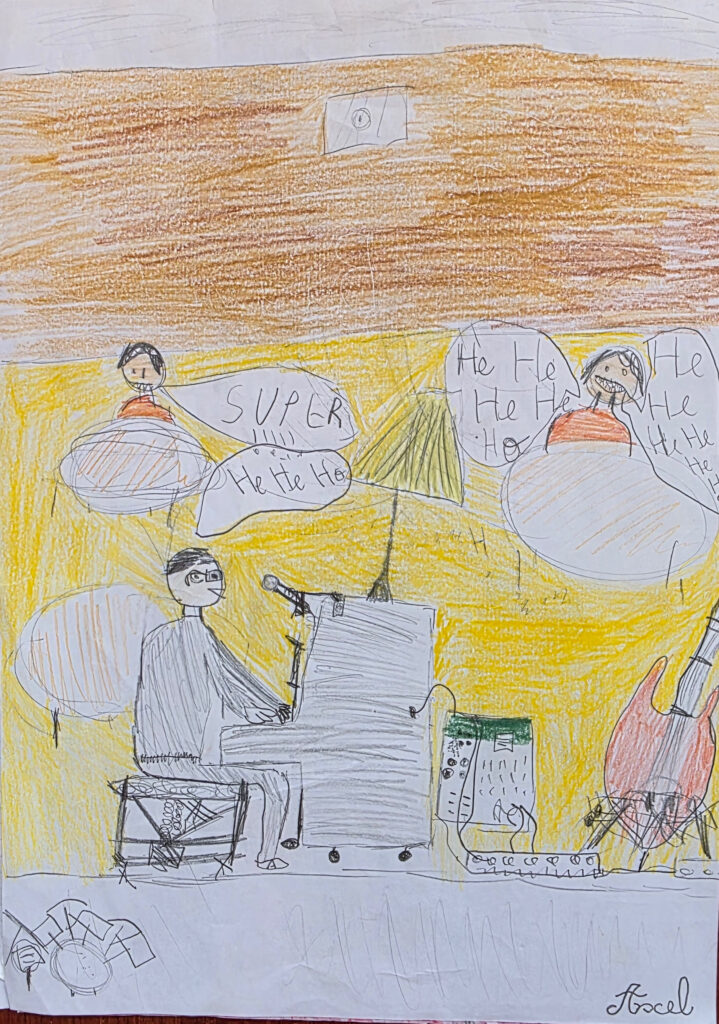
There are also drawings, letters, small gifts and memories – reminders that teaching can be about human connection, trust and personal development.